stone deaf pdf 2

Stone Deaf 2: A Comprehensive Guide (Updated 04/06/2026)
This manual serves as your detailed guide, ensuring optimal performance and enjoyment of the Stone Deaf 2. It’s designed to help you master every nuance, like a valve amp’s response.
Welcome to the world of high-gain overdrive! The Stone Deaf 2 isn’t just another distortion pedal; it’s a meticulously crafted tool designed to emulate the raw power and responsiveness of a classic, heavily modified valve amplifier. This guide will unlock its full potential.
Like a great tube amp, the Stone Deaf 2 dynamically reacts to your playing – your pick attack, your guitar’s volume knob – delivering a truly expressive and organic tone. It’s built for players who demand character and nuance, offering a wide spectrum of overdrive flavors, from subtle boost to searing distortion.
This comprehensive manual will walk you through every aspect of the pedal, from understanding its controls and specifications to troubleshooting common issues. We’ll also explore how it stacks with other pedals and compare it to similar options on the market. Prepare to elevate your sound!
What is the Stone Deaf 2?
The Stone Deaf 2 is a high-gain overdrive pedal engineered to replicate the sound and feel of a heavily modified, vintage valve amplifier. It’s not simply a distortion box; it’s a dynamic tonal shaping tool built for expressive playing. Inspired by the original Stone Deaf, this iteration boasts enhanced features and refined circuitry for superior performance.
At its core, the Stone Deaf 2 utilizes carefully selected components to deliver a rich, harmonically complex overdrive. It responds beautifully to your guitar’s volume control and pick attack, offering a playing experience akin to a responsive tube amp. Think searing leads, crunchy rhythms, and everything in between.
This pedal is designed for guitarists seeking a versatile and powerful overdrive that can handle a wide range of musical styles. It’s a modern classic, built to inspire and elevate your playing.
Key Features and Specifications

The Stone Deaf 2 distinguishes itself through several key features, beginning with its high-voltage Class A output stage, delivering a dynamic and responsive feel reminiscent of a classic valve amplifier. This stage, similar to designs found in the Strymon Fairfax, contributes significantly to the pedal’s organic tone.
Specifications include: Input Impedance: 1MΩ; Output Impedance: 10kΩ; Current Draw: 9mA at 9V DC; Power Supply: 9V DC center negative (no battery operation). The robust construction ensures durability for stage and studio use.
Further enhancing its versatility are the internal DIP switches, allowing for extensive customization of the pedal’s character. These features, combined with intuitive controls, make the Stone Deaf 2 a powerful tool for any guitarist.

Understanding the Controls
Mastering the Stone Deaf 2 requires understanding its intuitive controls, allowing precise shaping of your tone and dynamic response for optimal performance.
Gain Control: Shaping Your Tone
The Gain control is the heart of the Stone Deaf 2’s overdrive character, dictating the amount of signal amplification and resulting distortion. At lower settings, it provides a subtle boost, enhancing your clean tone with a touch of warmth and responsiveness, mirroring a slightly pushed valve amplifier.
As you increase the Gain, the overdrive becomes more pronounced, progressing from crunchy rhythms to searing lead tones. This control isn’t simply about volume; it fundamentally alters the harmonic content and dynamic feel of your signal. Like a good valve amp, the Stone Deaf 2 responds beautifully to your pick attack and guitar’s volume knob, offering expressive control over sustain and saturation. Experiment with different guitar volumes in conjunction with the Gain to unlock a wide spectrum of tonal possibilities, from delicate cleans to aggressive high-gain sounds.
EQ Section: Highs, Mids, and Lows
The Stone Deaf 2’s EQ section provides precise tonal sculpting capabilities, allowing you to tailor the overdrive to your specific guitar, amplifier, and musical style. It features dedicated controls for High, Mid, and Low frequencies, offering a broad palette of sonic adjustments.
Boosting the Highs adds clarity and bite, perfect for cutting through the mix during lead work. The Mids control shapes the core of your tone, adding warmth, fullness, or a focused midrange punch. Adjusting the Lows delivers everything from tight, articulate bass response to a thick, rumbling bottom end. Experimenting with these controls is crucial for finding the sweet spot that complements your gear and achieves your desired sound. Remember, subtle adjustments can make a significant difference in the overall tonal balance.
Output Level: Matching Your Amp
The Output Level control on the Stone Deaf 2 is essential for seamlessly integrating the pedal with your amplifier. It doesn’t simply adjust volume; it allows you to carefully match the pedal’s output signal to your amp’s input sensitivity, ensuring optimal headroom and preventing unwanted clipping or distortion.
Setting the Output Level too high can overload your amp, resulting in a harsh or muddy sound. Conversely, setting it too low may result in a weak or thin tone. The goal is to find the sweet spot where the pedal boosts your amp’s gain without sacrificing clarity or dynamic range. Experiment with different settings to discover how the Output Level interacts with your specific amplifier and guitar combination, achieving the perfect balance for your playing style.
Internal DIP Switches: Customization Options
The Stone Deaf 2 offers a range of internal DIP switch settings, allowing for extensive tonal customization beyond the external controls. These switches, accessible by removing the pedal’s base, enable you to fine-tune the pedal’s character to perfectly suit your preferences and rig.
These DIP switches modify aspects like the clipping diode selection, affecting the type of overdrive produced – from smooth and symmetrical to aggressive and asymmetrical. Other switches may alter the bass response, mid-range focus, or overall output impedance; Carefully consult the detailed diagram within this manual before adjusting these switches, as incorrect settings can significantly alter the pedal’s sound. Experimentation is encouraged, but document your changes to easily revert to preferred settings!

Sound Characteristics and Tone Shaping
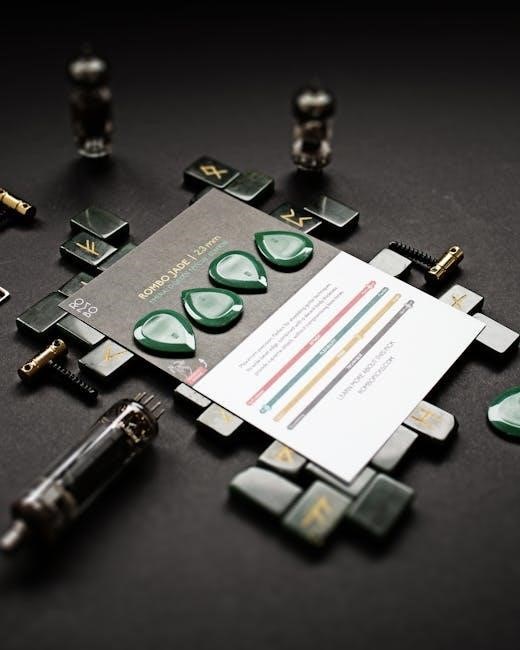
The Stone Deaf 2 delivers a high-gain overdrive, responding dynamically to your playing, much like a classic valve amplifier’s character and feel.
The Stone Deaf 2’s Signature Sound
The Stone Deaf 2 is renowned for its ability to emulate the aggressive, yet articulate, tones of heavily modified vintage amplifiers. It doesn’t simply offer distortion; it provides a responsive, dynamic overdrive that reacts to your pick attack and guitar’s volume control, mirroring the behavior of a high-quality valve amp. This responsiveness is key to its signature sound, allowing for expressive playing and nuanced tonal control.
Unlike many overdrive pedals that can sound sterile or compressed, the Stone Deaf 2 retains a sense of openness and clarity, even at high gain settings. This is achieved through careful circuit design and component selection, resulting in a sound that is both powerful and musical. It’s capable of producing everything from gritty rhythm tones to searing lead sounds, making it a versatile addition to any guitarist’s pedalboard. The pedal’s character is distinctly British, leaning towards a thick, mid-focused tone with plenty of harmonic richness.
Achieving Different Overdrive Flavors
The Stone Deaf 2’s versatility extends beyond simply being a “high-gain” pedal; it’s capable of a surprisingly wide range of overdrive tones. By carefully adjusting the Gain, EQ, and Output Level controls, you can dial in everything from a subtle boost to a full-throttle distortion. Lower gain settings, combined with a brighter EQ setting, yield a warm, crunchy overdrive perfect for blues or classic rock.
Increasing the gain and scooping the mids delivers a more modern, aggressive tone suitable for hard rock and metal. Experimenting with your guitar’s volume knob is crucial – the Stone Deaf 2 responds beautifully to changes in input signal, allowing you to clean up the sound or push it into further saturation. The pedal’s dynamic nature means it excels at replicating the responsiveness of a valve amplifier, offering a truly interactive playing experience.
Stacking with Other Pedals
The Stone Deaf 2 truly shines when integrated into a larger pedalboard, offering exciting possibilities for tone sculpting through stacking. Placing a boost pedal before the Stone Deaf 2 can push it into more extreme gain stages, creating soaring leads or incredibly thick rhythms. Conversely, a boost after the Stone Deaf 2 can increase overall volume and sustain for solos.
Experimenting with overdrive or distortion pedals before the Stone Deaf 2 can add layers of complexity and character. For example, combining a Tubescreamer-style overdrive with the Stone Deaf 2 can tighten up the low end and enhance the mid-range focus; Remember to consider the order of your pedals – different configurations will yield drastically different results. The Stone Deaf 2’s responsiveness makes it a fantastic platform for layering and creating unique sonic textures.

Powering and Connectivity
Ensure stable operation by adhering to the specified power supply requirements. Standard input/output jack configurations facilitate seamless integration into your existing guitar signal chain setup.

Power Supply Requirements
The Stone Deaf 2 operates optimally with a regulated 9V DC power supply, center-negative. We strongly recommend a power supply capable of delivering at least 200mA to ensure stable performance, especially during demanding playing scenarios or when stacking with multiple pedals. Using an inadequate power supply can result in unwanted noise, diminished output level, or even unpredictable behavior.
Avoid using battery power for extended periods, as the Stone Deaf 2 is designed for consistent performance with a dedicated power adapter. While it can function with a 9V battery, the tonal characteristics and overall reliability may be compromised. Always disconnect the power supply when making any connections or adjustments to the pedal to prevent potential damage. A high-quality power supply will significantly enhance your playing experience and prolong the lifespan of your Stone Deaf 2.
Input/Output Jack Configurations
The Stone Deaf 2 features standard ¼” mono input and output jacks, allowing for seamless integration into any guitar pedalboard setup. The input jack accepts a standard instrument cable from your guitar, while the output jack connects to your amplifier or the next pedal in your signal chain. For optimal signal flow and to minimize noise, we recommend using high-quality, shielded instrument cables.
The pedal is true bypass, meaning that when disengaged, the signal passes directly from the input to the output jack without any coloration or alteration. This preserves your guitar’s natural tone. Experiment with different cable lengths and configurations to find what works best for your specific setup. Proper cable management can also help reduce unwanted interference and ensure a clean, reliable signal path.
Troubleshooting Common Issues
Addressing potential problems ensures a smooth playing experience. Common concerns include no sound or unexpected noise; careful examination and adjustments will resolve these quickly.
No Sound Troubleshooting
If you encounter complete silence with your Stone Deaf 2, systematic troubleshooting is key. First, verify the power supply is securely connected and functioning correctly – a loose connection is a frequent culprit. Next, inspect your instrument cable; ensure it’s in good condition and firmly plugged into both your guitar and the pedal’s input jack.
Then, check the output jack connection to your amplifier. Confirm your amplifier is powered on and set to the correct input channel. Bypass the Stone Deaf 2 entirely by connecting your guitar directly to your amp; if sound is present, the issue lies within the pedal. If still no sound, examine your guitar’s volume and tone controls, and potentially the guitar cable itself.
Finally, double-check the internal DIP switch settings (refer to the ‘Internal DIP Switches’ section) as incorrect configurations can sometimes mute the signal. A methodical approach will quickly pinpoint the source of the problem, getting you back to playing.
Unexpected Noise or Feedback
Dealing with unwanted noise or feedback from your Stone Deaf 2 requires careful investigation. Often, excessive gain settings combined with high amplifier volume contribute to feedback loops. Begin by reducing the ‘Gain Control’ and ‘Output Level’ to more moderate settings, observing if the noise diminishes. Ensure your guitar’s volume knob isn’t maxed out, as this can exacerbate feedback.
Check for loose cables or poor grounding within your signal chain; these can introduce hum or static. Experiment with different cable routing to minimize interference. If using multiple pedals, try isolating the Stone Deaf 2 to determine if another pedal is the source of the noise.
Remember, like a good valve amp, the Stone Deaf 2 responds to your playing dynamics; excessive pick attack can also generate unwanted sounds. Adjust your playing technique and explore the ‘EQ Section’ to sculpt your tone and reduce problematic frequencies.

Comparing Stone Deaf 2 to Similar Pedals
The Stone Deaf 2 distinguishes itself through its responsive dynamics and unique tonal character, offering a distinct alternative to other high-gain overdrive options available today.
Stone Deaf 2 vs. Original Stone Deaf
The Stone Deaf 2 represents a significant evolution from its predecessor, the original Stone Deaf. While both pedals aim for high-gain overdrive, the 2nd iteration boasts enhanced versatility and refined tonal control. The original, known for its raw and aggressive sound, often lacked the nuanced shaping capabilities present in the newer model.
Key improvements in the Stone Deaf 2 include a more comprehensive EQ section, allowing for precise sculpting of highs, mids, and lows. The addition of internal DIP switches provides further customization, enabling users to tailor the pedal’s response to their specific amplifier and guitar. Furthermore, the Stone Deaf 2 generally exhibits a tighter low-end and improved clarity compared to the sometimes-muddy character of the original.
Essentially, the Stone Deaf 2 builds upon the foundation of the original, addressing some of its limitations and expanding its sonic palette, making it a more adaptable and refined overdrive option for modern guitarists.
Stone Deaf 2 vs. Other High-Gain Overdrive Pedals
Compared to other high-gain overdrive pedals, the Stone Deaf 2 occupies a unique space, often described as a blend between classic distortion and modern high-gain tones. Many competitors, like certain boutique overdrives or amp-in-a-box designs, focus on replicating specific amplifier circuits. The Stone Deaf 2, however, delivers a more distinct and aggressive character.
Where some pedals excel at transparent boost or subtle grit, the Stone Deaf 2 is unapologetically bold. It responds dynamically to playing intensity, much like a good valve amp, offering a satisfying pick attack sensitivity. Compared to some digital multi-effects or amp modelers, the Stone Deaf 2 provides an analog warmth and immediacy that many guitarists prefer.
Ultimately, the Stone Deaf 2 stands out due to its focused high-gain voicing and its ability to deliver a powerful, yet controllable, overdrive experience.