rotary lift installation instructions pdf
Rotary Lift Installation Instructions PDF: A Comprehensive Guide
Essential documentation details specifications and procedures for safe vehicle lift setup, encompassing bay layouts, height requirements, and crucial ANSI/ALI ALIS safety standards.
Understanding Rotary Lift Models and Documentation
Rotary lift installations necessitate a thorough understanding of specific models and their corresponding documentation. Manuals, available through searches focusing on Rotary, Forward Lift, Direct Lift, and Chief Collision Technology, are paramount. These resources provide critical details for proper setup and operation.
Different lift types – including floor plate and 2-post models – have unique installation requirements. The documentation outlines these variations, ensuring compatibility with your facility and vehicle lifting needs. Accessing the correct installation guide is the first step towards a safe and compliant setup. Ignoring model-specific instructions can lead to operational issues and safety hazards.
Locating Official Rotary Lift Installation Manuals
Finding official Rotary Lift installation manuals begins with targeted online searches. Focus your queries on “Rotary Forward Lift,” “Direct Lift,” and “Chief Collision Technology” to access the correct resources. These manufacturers provide comprehensive documentation on their websites and through support channels.
Installation resources and facility planning guides are also available, offering valuable insights before you begin. Ensure the manual corresponds precisely to your lift model number for accurate instructions. Utilizing unofficial or outdated manuals is strongly discouraged, as they may contain incorrect or unsafe procedures. Prioritize official documentation for a secure and compliant installation process.
Safety Precautions Before Installation
Prior to commencing installation, a critical warning must be heeded: DO NOT install the lift within a pit or any form of depression. This compromises structural integrity and safety. Thoroughly inspect all components, particularly containment tubes, for any signs of damage before beginning the process.
Ensure a fully trained and competent operator will be responsible for the lift’s operation post-installation. Regular maintenance is paramount for continued safe performance. Adhering to these precautions minimizes risks and guarantees the longevity of your Rotary Lift. Ignoring these warnings could lead to serious injury or equipment failure.
ANSI/ALI ALIS Safety Requirements
Before initiating any installation work, meticulously reference the ANSI/ALI ALIS Safety Requirements for Automotive Lift Installation and Service. These standards are non-negotiable and dictate safe practices throughout the entire process.
Compliance ensures the lift operates within defined safety parameters, protecting personnel and vehicles. The documentation provides detailed guidelines covering everything from foundation requirements to operational testing. Ignoring these requirements voids warranties and, more importantly, creates a hazardous working environment. Strict adherence to ANSI/ALI ALIS is legally mandated and ethically responsible for a safe installation.
Pre-Installation Facility Planning
Thorough facility planning is paramount before commencing lift installation. This involves assessing the available space and ensuring it meets the specified dimensions for a typical bay layout. Rotary provides resources for this, aiding in determining optimal placement.
Consider overall lift height specifications to avoid obstructions like lights, pipes, or doorways. Adequate clearance is crucial for safe operation. Proper planning minimizes installation complications and ensures long-term usability. Careful consideration of these factors prevents costly rework and guarantees a functional, safe lifting station within your workshop environment.
Typical Bay Layout Dimensions
Establishing appropriate bay dimensions is critical for safe and efficient lift operation. While specific requirements vary by model, a standard bay typically requires a width of at least 12 feet and a depth of 18-20 feet.
These dimensions allow sufficient space for vehicle maneuvering, technician access, and safe working clearances around the lift. Rotary documentation provides detailed layout guides for various lift models. Adhering to these guidelines ensures compliance with safety standards and optimizes workflow within the service bay. Precise measurements prevent potential collisions and facilitate smooth vehicle handling.
Overall Lift Height Specifications
Understanding the overall height of your chosen Rotary lift is paramount for facility planning. Specifications vary significantly depending on the lift model and capacity, ranging from approximately 10 to 14 feet or higher.
Carefully review the installation manual for the precise height of your specific lift. Ensure your facility has adequate ceiling clearance to accommodate the lift’s full range of motion, including raised vehicle height plus a safety margin. Insufficient clearance can lead to operational limitations and potential safety hazards. Accurate height assessment prevents costly modifications during installation.
Concrete Floor Requirements
Proper concrete flooring is critical for safe and stable lift operation. Rotary lift installations demand floors meeting specific strength and integrity standards. The documentation emphasizes the necessity of a solid, level concrete base capable of withstanding substantial dynamic loads.
Insufficient concrete quality can compromise lift stability and create hazardous conditions. Refer to the installation guide for detailed requirements regarding concrete mix design, compressive strength, and curing procedures. Adherence to these specifications ensures long-term reliability and prevents potential structural issues. Prioritize a robust foundation for optimal performance.
Minimum Concrete Thickness
Rotary lift installations necessitate a minimum concrete slab thickness to adequately support the lift’s weight and applied loads. The documentation specifies that a 4-inch (100mm) thickness is generally the absolute minimum for lighter-duty lifts, such as floor plate models.
However, for heavier-duty two-post lifts, particularly those handling larger vehicles, a 6-inch (150mm) or greater thickness is strongly recommended. This increased thickness provides enhanced load distribution and prevents cracking or settling. Always consult the specific installation manual for your lift model to confirm the precise concrete thickness requirement.
Minimum Edge Distance for Anchors
Proper anchor placement is critical for lift stability. Installation guides dictate a minimum edge distance from the concrete slab’s edge to the center of any anchor. Generally, this distance must be at least 6 inches (150mm), but can vary based on the lift’s capacity and anchor type.
Insufficient edge distance can lead to concrete breakout, compromising the lift’s structural integrity. The documentation emphasizes maintaining this distance to distribute loads effectively and prevent slab failure. Always refer to the specific anchor installation reference guide provided with your Rotary lift for precise measurements and recommendations tailored to your model.
Anchor Embedment Depth
Correct anchor embedment depth is paramount for a secure lift installation. Rotary lift manuals specify the minimum depth to which anchors must be inserted into the concrete floor, typically ranging from 2.5 to 4 inches (63.5 to 101.6mm), depending on the anchor type and lift capacity.
Insufficient embedment weakens the connection, potentially leading to lift failure. The documentation stresses adhering to these depths to ensure adequate pull-out resistance and load distribution. Always consult the anchor installation reference guide for your specific lift model to confirm the precise embedment requirements and utilize appropriate anchoring tools for optimal results.
Anchor Installation Reference Guide
The Anchor Installation Reference Guide, crucial for proper lift setup, details specific requirements based on lift capacity and concrete conditions. It outlines minimum concrete thickness, edge distances, and, importantly, anchor embedment depths – typically 2.5 to 4 inches.
This guide provides a table correlating lift weight (e.g., 7-10K lbs) with appropriate anchor specifications. It emphasizes using the correct anchor type for the concrete, and proper installation techniques. Always refer to this guide before beginning anchor installation to guarantee a secure and stable lift foundation, preventing potential safety hazards and ensuring long-term reliability.
Lift Component Identification
Accurate identification of lift components is paramount during installation and maintenance. Key elements include the carriage, responsible for lift movement, and the equalizer cables, ensuring balanced lifting. Detailed attention should be given to the latch dog pin (referenced in Fig. 6), crucial for secure locking mechanisms.
Understanding these components allows for correct adjustment and inspection. The manual highlights the importance of checking and adjusting the carriage and equalizer cable tension. Referencing figures like Fig. 5, 6, 7, and 8 provides visual guidance for locating and understanding each part’s function within the overall lift system. Proper identification facilitates safe and efficient operation.
Carriage and Equalizer Cable Adjustment
Proper carriage and equalizer cable adjustment is vital for balanced lifting and operational safety. To check equalizer cable tension, raise the lift and grasp adjacent cables; they should pull together with approximately 67N of effort. Adjustments are made at the upper portion of the lift mechanism.
Ensure the carriage moves smoothly along the rails. Loosen clamps as needed to remove slack in the cables, maintaining even tension across all cables. Refer to Fig. 5 for detailed visuals of the adjustment points. Incorrect adjustments can lead to uneven lifting or premature wear, so precision is key. Regular checks are recommended.
Latch Dog Pin Details

The latch dog pin is a critical safety component, securing the carriage at designated lift heights. Inspect the pin for any signs of damage or wear before and during installation. Loosen the clamp associated with the latch dog pin (as illustrated in Fig. 6) to facilitate adjustments and remove any existing slack.

Ensure the pin engages fully with each locking position, preventing accidental lowering. Proper alignment is crucial for reliable operation. Refer to the detailed diagrams in Fig. 6 to understand the pin’s mechanism and correct positioning. A malfunctioning latch dog pin compromises lift safety, necessitating immediate replacement by a qualified technician.
Equalizer Cable Tension Check
Maintaining correct equalizer cable tension is paramount for balanced lifting and operational safety. Raise the lift to a moderate height and, positioned below the carriage, grasp adjacent cables. Apply approximately 67N (around 15 lbs) of force; the cables should pull together with slight resistance. Adjust tension at the upper anchor points if excessive slack or tightness is detected.
Uneven tension can lead to instability during operation and premature wear on lift components. Regular checks, as part of routine maintenance, are vital. Consult the installation manual for specific adjustment procedures related to your Rotary lift model. Improper tension can void warranties and create hazardous conditions.
Post Lift Operating Manual Overview
The Rotary post lift operating manual is a critical resource, though it notably doesn’t include user-specific operating instructions – those must be created by the lift’s operator. It provides essential information regarding the lift’s components, safety features, and maintenance schedules. Key sections detail proper usage, load capacity limits, and troubleshooting guidance.
Review the manual thoroughly before initial operation and keep it readily accessible for reference. Pay close attention to warnings and cautions highlighted throughout the document. Understanding the manual ensures safe and efficient lift operation, maximizing its lifespan and minimizing potential hazards. Familiarize yourself with all sections for optimal performance.
Important Information within the Manual
The Rotary lift manual emphasizes crucial details beyond basic operation. Specifically, it highlights the necessity for users to draft their own operating instructions tailored to their specific needs and workflow. Furthermore, it contains vital warnings regarding installation – explicitly stating “DO NOT install this lift in a pit or depression.”

The manual also stresses the importance of trained operators and regular maintenance for ensuring satisfactory performance and longevity of the lift. Detailed sections cover component identification, like latch dog pins (referencing Fig. 6), and equalization cable tension checks. Always prioritize safety and adhere to the guidelines provided within this comprehensive document.
Avoiding Common Installation Errors
A primary concern detailed in installation guides is preventing installation within pits or depressions – a strict warning is repeatedly issued against this practice. Equally critical is a thorough inspection of all components, particularly containment tubes, before commencing installation. Damaged tubes must not be used under any circumstances, as they compromise lift integrity and safety.
Furthermore, installers must meticulously follow anchor installation guidelines, paying close attention to minimum concrete thickness, edge distances, and embedment depths. Ignoring these specifications can lead to instability and potential failure. Adhering to these preventative measures ensures a secure and reliable lift installation.

Do Not Install in Pits or Depressions

The installation manuals emphatically warn against installing the lift within any pit or depression in the floor. This is a non-negotiable safety requirement, as such installations fundamentally compromise the structural integrity of the lift. Pits or depressions cannot provide the necessary stable and level foundation required for safe operation.
Installing in these conditions introduces undue stress on the lift’s components, increasing the risk of instability and potential collapse during use. The documentation stresses that a solid, level concrete surface is absolutely essential. Ignoring this warning voids warranties and creates a significant safety hazard for personnel and vehicles.
Inspecting for Damaged Containment Tubes
Prior to installation, a thorough inspection of all containment tubes is critically important. The documentation highlights the necessity of identifying any existing damage – dents, cracks, or corrosion – before proceeding. Damaged tubes compromise the lift’s safety mechanisms, specifically those designed to contain a falling vehicle in the event of a cable or component failure.
Do not install a lift with compromised containment tubes; replacement is mandatory. Even seemingly minor damage can significantly reduce the tubes’ ability to perform their intended function. Carefully examine the entire length of each tube, both internally and externally, for any signs of weakness or structural compromise. Safety relies on these components.
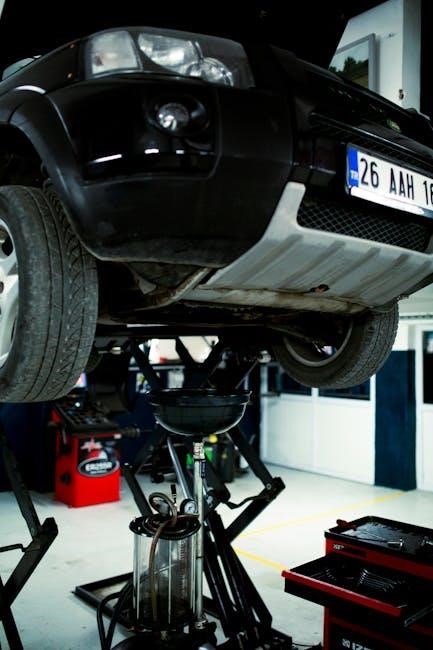
Trained Operators and Regular Maintenance
Ensuring satisfactory performance of your Rotary lift hinges on employing adequately trained operators and adhering to a consistent maintenance schedule. The installation instructions emphasize that proper operation requires understanding the lift’s capabilities and limitations, alongside strict adherence to safety protocols. Untrained personnel pose a significant risk to themselves and others.
Regular maintenance, as outlined in the post lift operating manual, is equally vital. This includes routine inspections of cables, hydraulic systems, and safety mechanisms. Proactive maintenance prevents minor issues from escalating into major, potentially hazardous, failures. Consistent upkeep extends the lift’s lifespan and guarantees reliable operation.
Troubleshooting Installation Issues
During installation, encountering issues is possible; careful review of the Rotary lift installation instructions PDF is crucial. Common problems might involve anchor bolt alignment or difficulties adjusting equalizer cable tension. If cables aren’t pulling together with approximately 67N of effort, adjustments are needed at the upper latch dog pin (Fig. 6).
Inspect all components meticulously, referencing Fig. 5, Fig. 6, Fig. 7, and Fig. 8 for detailed views. Damaged containment tubes are a critical concern – do not install if damage is present. If issues persist beyond your expertise, or if you’re unsure about any step, immediately contact a qualified Rotary repair person for assistance.
Understanding Fig. 5, Fig. 6, Fig. 7, and Fig. 8 Details
These figures within the Rotary lift installation instructions PDF provide critical close-up views of key components. Fig. 5 details specific aspects of the carriage assembly, while Fig. 6 focuses on the latch dog pin, illustrating proper loosening of the clamp for slack removal.
Figs. 7 and 8 showcase further intricate details of the lift’s mechanisms, aiding in correct assembly and adjustment. Careful study of these illustrations is essential for accurate installation, particularly when adjusting equalizer cables and ensuring secure anchor placement. Referencing these diagrams minimizes errors and promotes a safe, functional lift system.
When to Contact a Rotary Repair Person
Despite following the Rotary lift installation instructions PDF diligently, certain situations necessitate professional assistance. If you encounter difficulties adjusting equalizer cable tension – failing to achieve the proper 67N pull-together force – a technician is required.
Furthermore, any uncertainty regarding latch dog pin adjustments or concerns about damaged containment tubes warrant immediate contact with a qualified Rotary repair person. Do not attempt repairs beyond your expertise; improper fixes can compromise lift safety. Seeking professional help ensures correct installation and ongoing maintenance, safeguarding personnel and equipment.
Post-Installation Inspection Checklist
Following installation, a thorough inspection is critical for ensuring operational safety. Verify all anchor bolts are correctly tightened to specified torque values, referencing the anchor installation guide. Confirm proper equalizer cable tension – cables should yield with approximately 67N of force.
Inspect the latch dog pins (Fig. 6) for secure engagement and smooth operation. Check containment tubes for any damage, as noted in warnings against installation with compromised components. Review the post lift operating manual for additional inspection points. Document all findings and address any discrepancies before operational use, prioritizing a safe working environment.